01
Steam, not force
It melts the ice out in strips without touching the roof. Chipping at it, salting it or pressure-washing it causes more damage every January than the dams themselves do.
Serving the Miami Valley
Storm Damage Repair
Low-pressure steam that will not touch the shingles, plus the attic fix so it stops happening every January.
Tell us what you can see. Ice along the gutter line, or a wet mark along an outside wall.
Steam, never force
Low pressure melts it out in strips. Chipping, salting and pressure-washing all damage the roof.
Same-week response
Ice at the roof edge in January is not something that improves by waiting for the thaw.
The attic looked at
Removal treats the symptom. We will tell you what is causing it before we leave.
The Problem
Then the roof is not the problem. The attic is.
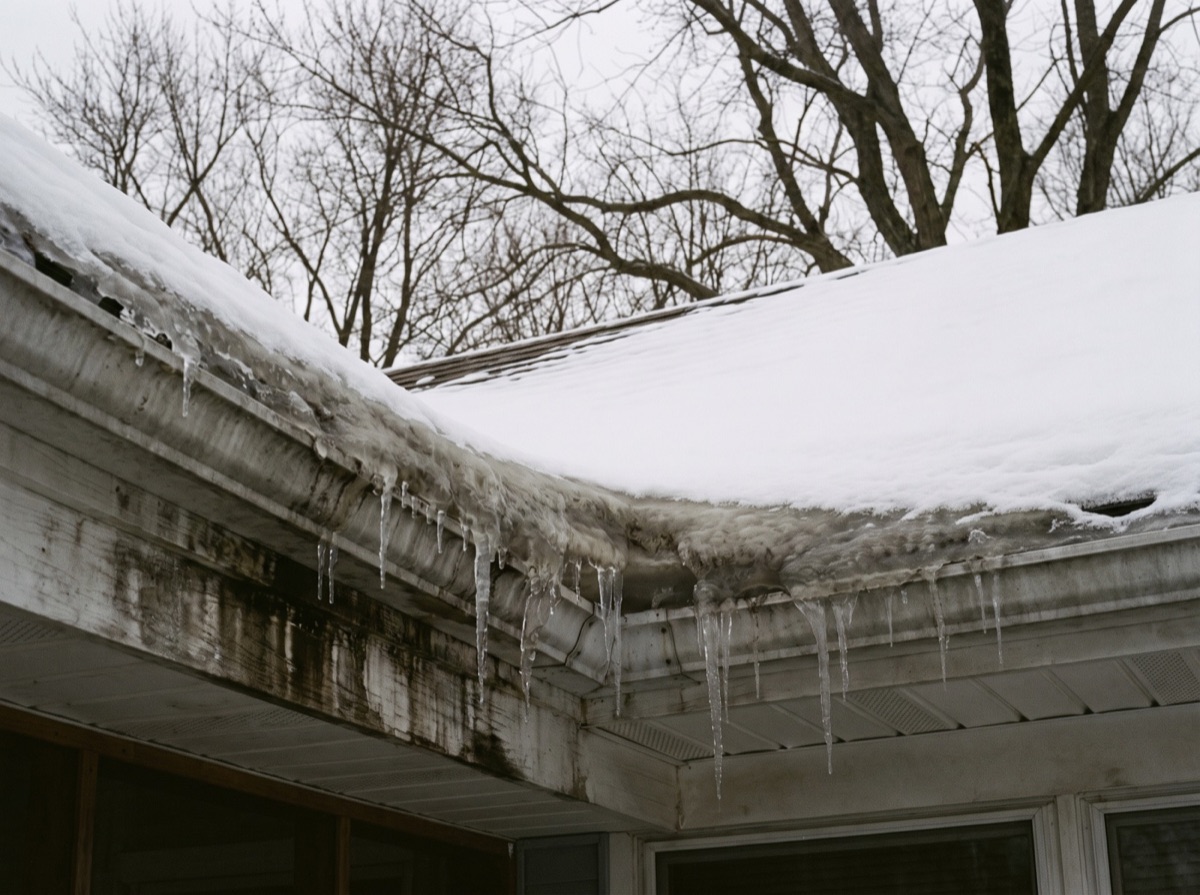
Heat escaping into the attic melts snow on the upper roof. The meltwater runs down to the cold roof edge and freezes again. The ridge of ice that builds up traps the next melt behind it, and sooner or later that water gets under the shingles. Shingles are made to shed water running downhill, not to hold it back. Whether your house does this at all comes down to what is in the attic, not what is on the roof.
Why Us
Adding baffles and topping up insulation costs a fraction of three seasons of removal, and it is the only thing that actually brings it to an end.
It melts the ice out in strips without touching the roof. Chipping at it, salting it or pressure-washing it causes more damage every January than the dams themselves do.
Warm air escaping upward is the cause; the ice is only where it shows. On 1950s stock the insulation and ventilation predate modern code by fifty years.
Which is exactly where the fascia and the front of the soffit are. Repeated damming is why so much of the rotten wood we cut out sits in that one spot.
What We Do
Everything we cover under Dayton roofing services, from a single slipped shingle to a full tear-off. Not sure which one you need? Call and we'll tell you straight.
The Difference
Removing a dam is straightforward and it changes nothing. The ice forms because warm air is escaping into the attic and melting snow on the upper roof. Unless that stops, it will form again in the next cold spell, and the one after that.
Two identical houses on one street behave completely differently depending on insulation depth and whether the soffit intake is clear. So we come to take the ice off, and we go into the attic while we are there, because otherwise you are booking us again in three weeks.
Those shallow Kettering roofs account for most of our January calls. Low, wide roofs and 1950s attic insulation are a bad combination in an Ohio winter.
How It Works
On site the same week, and gone in a few hours.
Ice at the roof edge, or water showing along an outside wall. Both mean it is already backing up under the shingles.
Low-pressure steam cut through the dam to open drainage channels, without touching the shingles underneath.
So the meltwater has somewhere to go once it is running again rather than refreezing at the same spot.
Insulation depth, soffit intake and air leaks. That conversation is the one that ends it for good.
Reviews
“We had a leak over the back bedroom for almost two years and kept putting a bucket under it. The team found the problem in about ten minutes. It turned out to be the flashing around the chimney, not the shingles. They fixed it that same afternoon. I wish we had called sooner.”
“We had a full tear-off on our 1950s ranch. The crew arrived at 7 every morning and finished the job in three days. They even swept the entire driveway with a magnetic roller so our kids wouldn't pick up any nails. The final price was exactly what we were quoted.”
“After the hail last June, our insurance company questioned whether the damage was from the storm or simply the age of the roof. The team inspected everything, took detailed photos, and joined the call with our adjuster. The claim was approved. I don't think we would have managed it on our own.”
“Good work at a fair price. I gave four stars because our job had to be pushed back a week due to rain, and I had already taken the day off. They did call ahead and kept us informed instead of simply not showing up, which I appreciated.”
“A tree came down on our garage roof at around nine at night. Someone actually answered the phone, which I wasn't expecting. They had the roof tarped before midnight and came back the following week for the permanent repair. Great response when we needed help.”
“We had new seamless gutters and gutter guards installed around the whole house. They made the gutters right there on site, which I hadn't seen before. We've had two heavy storms since the installation and nothing has overflowed onto the patio. That was exactly the problem we wanted fixed.”
“I booked a roof inspection expecting to hear that we needed a full replacement because that's what the previous two companies told us. After inspecting it, they said our roof probably had about five years left and told us to call back when the time came. They didn't charge us for the inspection. That honesty is why they'll get the job when we eventually replace it.”
“This is the second time we've used them. They installed our gutters a couple of years ago, and we recently hired them again for a full roof replacement. We even had the same crew leader both times. The quote was clearly itemized, so we could see exactly what we were paying for, including the wood underneath repairs.”
Heat escaping into the attic melts snow on the upper roof. The water runs down to the roof edge, which is cold because there is no house underneath it, and refreezes. That ridge of ice then holds the next melt behind it until the water finds a way under the shingles. It always does, because shingles shed water. They do not seal against it.
The stain that appears on the ceiling below is usually the first anyone knows about it. So the ice is the symptom. The cause is warm air in the attic. On the 1950s housing that fills Montgomery County, that usually comes back to insulation and venting that are fifty years behind current standards.
We use low-pressure steam. It melts the ice out in strips without touching the shingles. Do not chip at it with anything. Do not throw salt up there, and do not point a pressure washer at it. Those three things cause more damage every January than the ice does. Prevention starts in November with clearing the gutters, not in January with a shovel.
Once it is off, the conversation worth having is about the attic. Adding baffles and topping up insulation costs a fraction of doing this every winter, and it is the only thing that actually fixes it. Where the fascia behind the gutter has already gone soft, that gets dealt with at the same time, see soffit and fascia repair.
Steam removal typically runs $400 to $1,200 depending on how much ice there is and the access. It is worth asking about the attic at the same time, because a ventilation fix costs less than three winters of removal.
Almost always attic ventilation and insulation. Two identical houses on the same street will behave completely differently if one has baffles at the roof edge and adequate insulation depth and the other does not. It is not about which way the roof faces.
Free Estimate
Steam takes the ice off without touching the shingles. The attic is what stops it forming again.