01
Inspection before filing
A free look tells you whether the damage is storm-related and roughly what it costs. A denied claim sits on your record and buys you nothing whatsoever.
Serving the Miami Valley
Storm Damage Repair
We document the damage, meet your adjuster on the roof, and tell you plainly when there is no claim worth filing.
Find out whether you have a claim before you ring your insurer. It costs nothing to know.
Inspected before you file
So you know whether you have a claim, and whether it clears your deductible at all.
You stay the policyholder
We never ask you to sign the claim over to us. It stays yours from start to finish.
Supplements documented
If the scope missed roof boards or code-required membrane, that goes back with photographs attached.
The Problem
Sudden storm damage is covered and wear is not. Everything turns on that one line.
Every question an adjuster asks is an attempt to place what they are looking at on one side of it. Sharp, recent, mechanical damage sits on the covered side. Slow deterioration sits on the other, and no amount of argument shifts it across. Find out which one you have before you call your insurer. If the damage comes in under your deductible, filing does you no good at all, and a claim on your record does you harm.

Why Us
An adjuster working alone from a ladder sees less than one being shown where the bruising is. That difference is often a repair settlement against a replacement settlement.
A free look tells you whether the damage is storm-related and roughly what it costs. A denied claim sits on your record and buys you nothing whatsoever.
Where a scope missed soft wood, drip edge or code-required membrane at the roof edge, that goes back to the carrier documented rather than quietly absorbed.
Offer to cover your deductible, or ask you to sign the claim over to us. Billing a carrier for a deductible you never paid is fraud.
What We Do
Everything we cover under Dayton roofing services, from a single slipped shingle to a full tear-off. Not sure which one you need? Call and we'll tell you straight.
The Difference
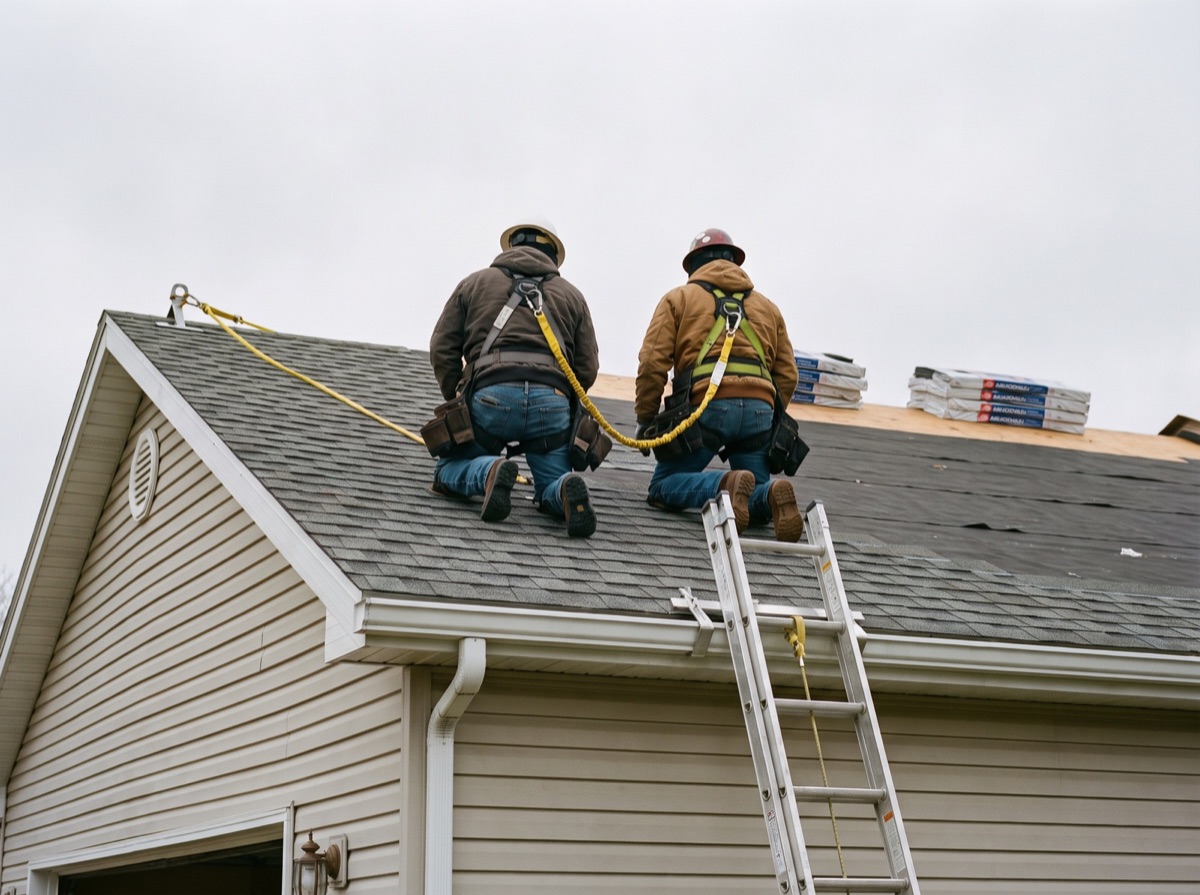
We will not offer to cover your deductible. Billing an insurer for money you never paid is fraud. A contractor who is comfortable with that is telling you how they will handle the parts of your roof you cannot see. We will not ask you to assign the claim to us, and we will not tell you that you have a claim when you do not.
What we will do is document what is actually there, meet your adjuster on the roof, and put a supplement in when the scope has missed something. Ohio does not license roofers, so there is no board to complain to. The paperwork is all the protection you have.
We handle more of these in Trotwood than anywhere else, because the 2021 hail is still working its way through as claims.
How It Works
Five stages, and the first is the one people skip.
A denied claim sits on your record. Find out what you have before the carrier is involved at all.
We give you the photographs and a written scope. The call to your insurer is yours to make.
On the roof, walking them through what we found rather than hoping they spot it themselves.
Carriers pay actual cash value first and the depreciation on completion. Anything missed goes back documented.
Reviews
“We had a leak over the back bedroom for almost two years and kept putting a bucket under it. The team found the problem in about ten minutes. It turned out to be the flashing around the chimney, not the shingles. They fixed it that same afternoon. I wish we had called sooner.”
“We had a full tear-off on our 1950s ranch. The crew arrived at 7 every morning and finished the job in three days. They even swept the entire driveway with a magnetic roller so our kids wouldn't pick up any nails. The final price was exactly what we were quoted.”
“After the hail last June, our insurance company questioned whether the damage was from the storm or simply the age of the roof. The team inspected everything, took detailed photos, and joined the call with our adjuster. The claim was approved. I don't think we would have managed it on our own.”
“Good work at a fair price. I gave four stars because our job had to be pushed back a week due to rain, and I had already taken the day off. They did call ahead and kept us informed instead of simply not showing up, which I appreciated.”
“A tree came down on our garage roof at around nine at night. Someone actually answered the phone, which I wasn't expecting. They had the roof tarped before midnight and came back the following week for the permanent repair. Great response when we needed help.”
“We had new seamless gutters and gutter guards installed around the whole house. They made the gutters right there on site, which I hadn't seen before. We've had two heavy storms since the installation and nothing has overflowed onto the patio. That was exactly the problem we wanted fixed.”
“I booked a roof inspection expecting to hear that we needed a full replacement because that's what the previous two companies told us. After inspecting it, they said our roof probably had about five years left and told us to call back when the time came. They didn't charge us for the inspection. That honesty is why they'll get the job when we eventually replace it.”
“This is the second time we've used them. They installed our gutters a couple of years ago, and we recently hired them again for a full roof replacement. We even had the same crew leader both times. The quote was clearly itemized, so we could see exactly what we were paying for, including the wood underneath repairs.”
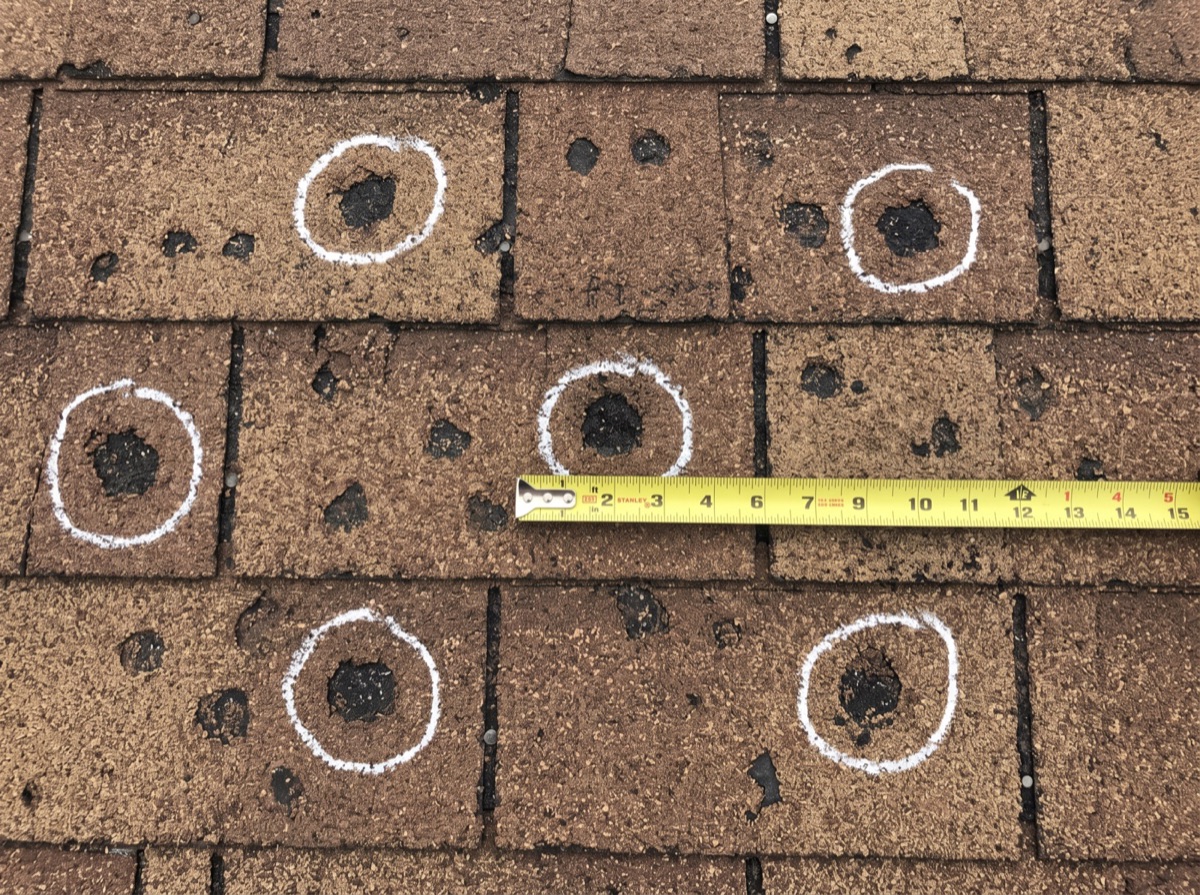
One distinction decides nearly every roof claim: sudden damage from a storm is covered, and wear from age is not. Everything an adjuster does on your roof is an attempt to place what they are looking at on one side of that line. Hail bruising, creased shingles and lifted tabs read as storm. Granule loss, curling and brittle edges read as age.
Which is why dated photographs taken close to the storm matter more than anything else you can do. We inspect free, we photograph what we find, and you keep the file whether you claim, whether you hire us, or neither. The inspection itself is described on the storm damage page.
The Memorial Day 2019 outbreak put fifteen tornadoes across Montgomery, Greene and Miami counties in one night, including a half-mile wide EF4. It cost around $1.6 billion in insured losses, the costliest tornado event in Ohio's history. On 18 June 2021, hail between one and one and three-quarter inches fell on downtown Dayton, Trotwood, Northridge and Clayton.
After events on that scale, carriers get a wave of claims and a wave of contractors, and they respond by scrutinizing both. Ohio does not issue a statewide roofing license. Contractors register with the Secretary of State and nothing more. So an adjuster here has no license number to check. That is the reason documentation and a written scope carry more weight in this state than they might elsewhere.
Five stages, and the first one is the one people skip.
Find out whether you have a claim before you call the carrier. A free inspection tells you whether the damage is storm-related and roughly what the repair involves. If it comes in under your deductible, filing does you no good and a claim on your record does you harm.
You file, not us. You are the policyholder and it stays that way. The carrier assigns an adjuster and schedules an inspection, usually within a couple of weeks and longer after a widespread event.
We meet them on the roof. Not to argue, but to make sure they see everything. That includes the slopes that are awkward to reach, and the flashing that is easy to miss from a ladder.
The carrier issues a scope of work and usually pays in two parts: actual cash value now, and the recoverable depreciation once the work is finished and invoiced. Your deductible comes off the total.
Sometimes the first estimate misses something: soft wood, a drip edge (the metal strip that throws water clear into the gutter), or the waterproof layer the code requires at the roof edge. We send that back to your insurer as an add-on, with photographs attached.
We will not tell you that you have a claim when you do not. We will not offer to cover your deductible. That is fraud, plain and simple, and anyone who offers is telling you something useful about how they run the rest of the job. And we will not ask you to sign the claim over to us.
If your roof is worn out rather than damaged, we will say so. You can then read what a replacement costs and decide in your own time, or look at financing if that is the constraint rather than the decision.
If the damage is sudden and storm-related, yes. If the roof is simply old, the claim will be denied and the denial sits on your record. The useful first step is an inspection that tells you which of the two you have. We do that free, and you keep the photographs either way.
You file the claim. Your insurer sends an adjuster, who writes up what they think the job is. The insurer pays part of it up front, and the rest once the work is finished, less your deductible. We meet the adjuster on the roof and handle supplements if the scope misses something. You stay the policyholder throughout.
A straightforward claim usually runs a few weeks from filing to first payment. After a widespread event it takes longer, because every adjuster in the region is working the same storm. Emergency work to stop water entering the house does not wait for any of that, see emergency roof repair.
It is the rule of thumb insurers and building officials use to decide between a repair and a new roof. Past about a quarter of the roof, patching stops paying. It is not Ohio law. It matters in a claim for two reasons. It is often the argument for replacing a whole slope instead of patching it. And Ohio requires a permit once a repair touches more than 25% of the wood underneath.
Free Estimate
A denied claim sits on your record. We will tell you honestly if the damage is under your deductible.